How to Read a Snack Nutrition Label: What to Check Before Buying Makhana
Choosing a snack is not just about flavour or price. When you compare different packaged snacks, the nutrition label can help you understand what you are actually buying. Two products may look similar on the shelf but differ in ingredients, serving size, sodium content and nutritional value.
This is particularly useful when shopping for healthy roasted snacks. Roasted makhana is available in plain and flavoured varieties, and the ingredients can vary from one product to another. Knowing how to read the packaging makes it easier to compare options and choose a snack that suits your preferences.
Whether you are shopping at a local store or planning to buy roasted makhana online, here are the main details worth checking before placing an order.
1. Start With the Ingredient List
The ingredient list is one of the first things to check on any packaged snack. It tells you which ingredients have been used to make the product.
For plain roasted fox nuts, the ingredient list may be relatively simple. Flavoured varieties can contain additional ingredients such as spices, salt, flavouring preparations and seasoning blends.
When comparing products, consider the following:
-
Main ingredient: Check whether makhana is the primary ingredient.
-
Seasoning: Look at the ingredients used to create the flavour.
-
Added ingredients: Identify any ingredients you prefer to limit or avoid.
-
Allergen information: Check the allergen declaration, particularly if you have a food allergy.
A longer ingredient list does not automatically mean a product is unhealthy. The purpose is to understand the composition and make an informed choice based on your dietary needs.
For example, someone who enjoys spicy snacks may prefer a seasoned option, while someone looking for a simpler ingredient profile may prefer plain or lightly seasoned makhana.
2. Understand Serving Size Before Comparing Nutrition
One common mistake is comparing nutrition figures without checking the serving size.
A nutrition panel may provide values per 100 grams, per serving or per package. These figures are not directly comparable unless you account for the quantity.
Imagine two hypothetical snack labels:
| Nutrition detail | Snack A | Snack B |
|---|---|---|
| Serving size | 25 g | 50 g |
| Calories per serving | 100 kcal | 190 kcal |
| Protein per serving | 3 g | 5 g |
Snack B contains more protein per serving, but its serving size is twice as large. To make a fair comparison, calculate the values for the same weight.
This approach is useful when comparing roasted makhana with other packaged snacks or comparing different pack sizes of the same product.
Remember that the amount you actually eat may be different from the serving size printed on the label.
3. Check Calories, Protein and Fat Together
No single nutrition figure tells you everything about a snack. It is more useful to consider several values together and relate them to your personal dietary requirements.
Calories: These indicate how much energy a serving provides. Compare equivalent quantities rather than relying on the total calories shown for differently sized packs.
Protein: Protein contributes to normal growth and the maintenance of body tissues. Makhana provides some plant-based protein, but the actual amount depends on the product and serving size. Check the nutrition panel rather than assuming all brands provide the same quantity.
Total fat: Roasting methods and added ingredients can affect the fat content. If fat intake matters to you, check the total fat value and the ingredient list.
Carbohydrates: These contribute to the energy provided by food. Their amount should be considered alongside serving size and the rest of your diet.
When evaluating roasted fox nuts, avoid choosing a product based on a single attractive number. The overall nutrition profile gives you a more useful picture.
4. Pay Attention to Sodium in Flavoured Snacks
Flavoured snacks can differ considerably in their sodium content because of the seasonings used.
Sodium is an essential nutrient, but consuming too much can contribute to high blood pressure. People who need to manage their sodium intake should pay particular attention to the nutrition panel and follow appropriate dietary advice.
When comparing Cream & Onion, Peri Peri or other flavoured makhana varieties, check the sodium value for the same quantity.
Also remember that salt and sodium are related but are not identical terms. If you are comparing products, use the sodium figures provided on their nutrition panels rather than assuming that stronger flavour always means higher sodium.
This simple check can help you select a snack that better matches your preferences and dietary requirements.
5. Look Beyond the Words “Roasted” and “Healthy”
Packaging often uses terms such as roasted, natural, high protein or healthy to describe a snack. These descriptions should not replace a careful look at the ingredients and nutrition information.
For example, roasted makhana and fried snacks may be prepared differently, but that does not automatically make every roasted product nutritionally identical or suitable for every diet.
When you buy makhana online, review the available product information and look for details such as:
-
Ingredients and seasoning composition
-
Nutrition information
-
Net quantity
-
Allergen declarations
-
Storage instructions
-
Manufacturer or brand information
-
Applicable food-label declarations
Also distinguish between a product's marketing claims and the information shown on its packaging. Where a claim matters to your purchasing decision, look for the supporting product details.
The goal is not to avoid every packaged snack. It is to understand the product before deciding whether it suits you.
6. Compare Pack Size and Price Fairly
A lower price does not always mean better value. Different snack packs may contain different quantities, making direct price comparisons misleading.
To compare products fairly, calculate the price per 100 grams.
Formula:
Price per 100 g = (Pack price ÷ Pack weight in grams) × 100
For example, if a 50 g pack costs ₹100, the price per 100 g is ₹200. If a 100 g pack costs ₹180, the price per 100 g is ₹180.
In this example, the larger pack offers a lower price per 100 grams. However, you should also consider flavour preference, packaging, freshness information and whether you can finish the pack within the recommended storage period.
This comparison is especially helpful when evaluating individual packs, multipacks and assorted snack combinations.
7. Check Packaging and Storage Information
Packaging plays an important role in protecting a crunchy snack during storage and transport. However, the appearance of a packet alone cannot guarantee freshness.
Before purchasing, check the manufacturing or packing details where provided, the best-before date, storage instructions and whether the packaging appears suitable for protecting the product.
For online purchases, review the product description and available packaging information. Once the snack arrives, store it according to the instructions on the pack and close it properly after opening if the packaging allows this.
Moisture exposure can affect the crisp texture of makhana. Following the recommended storage guidance helps maintain the eating experience for longer.
If a product arrives with damaged packaging or appears spoiled, contact the seller rather than consuming it.
8. Choose the Flavour That Fits Your Preferences
Nutrition information is important, but enjoyment matters too. A snack that suits your taste preferences is more likely to fit naturally into your routine.
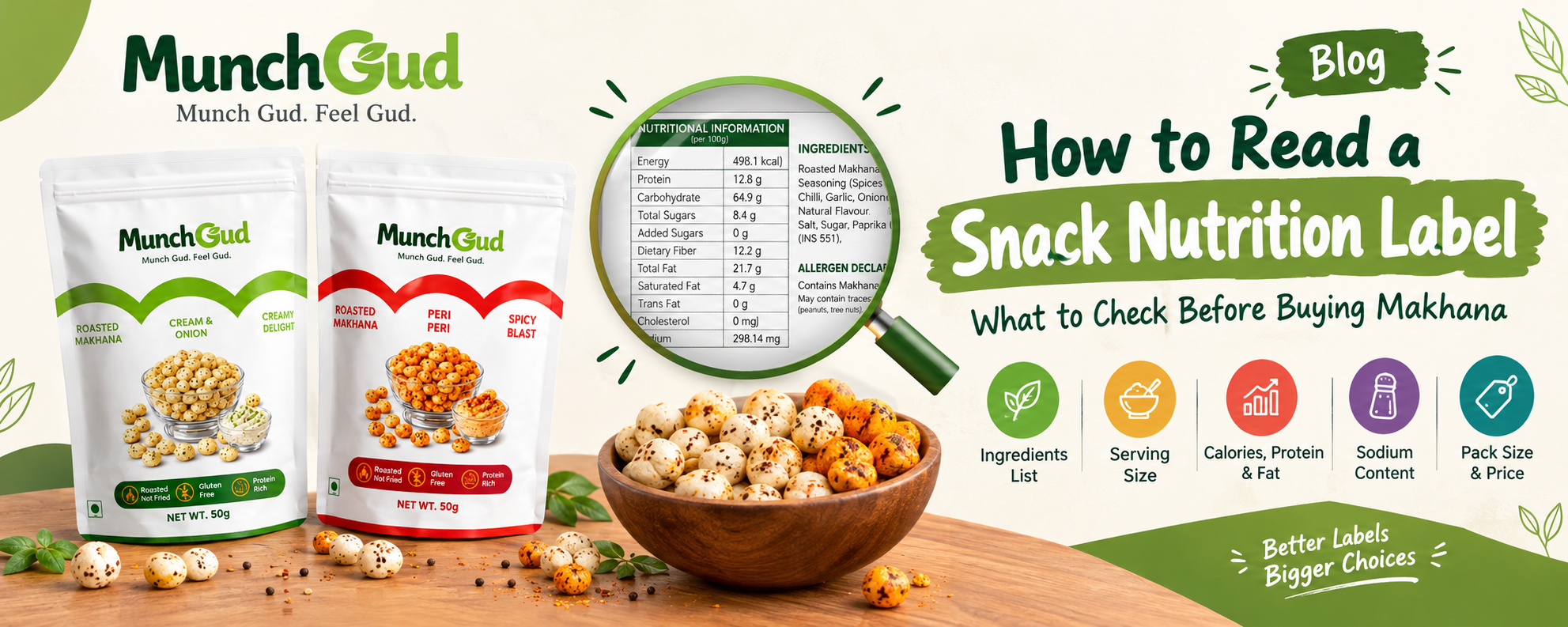
MunchGud offers flavoured roasted makhana options, including Cream & Onion and Peri Peri. These provide different taste experiences, from a creamy savoury profile to a spicy, tangy flavour.
If you are trying a new flavour, consider starting with a smaller pack before purchasing a larger quantity. If you are shopping for a family or workplace, a combination of flavours may offer more variety.
Before choosing, compare the product information, pack size, price and ingredients. That way, your decision reflects more than the flavour name or promotional offer.
9. A Simple Checklist Before You Buy
Use this checklist whenever you compare packaged snacks online or in a store.
-
Check the main ingredients and seasoning.
-
Compare serving sizes before reviewing nutrition figures.
-
Review calories, protein, fat and sodium.
-
Read allergen information if relevant to you.
-
Compare the price per 100 grams.
-
Check the net quantity and best-before date.
-
Review storage instructions and packaging information.
-
Choose a flavour and portion size that suit your needs.
You do not need to spend several minutes analysing every label. With practice, these checks become a straightforward part of your shopping routine.
Final Thoughts
Making an informed snack choice starts with understanding what is printed on the package. Ingredients, serving size, nutrition values, price and storage information all help you compare products more meaningfully.
Roasted makhana can be a convenient addition to an everyday snacking routine, but different products may have different nutritional profiles. Taking a moment to read the label helps you select an option based on your own preferences rather than relying only on promotional descriptions.
If you are exploring healthy roasted snacks, MunchGud's range of roasted makhana offers flavours to consider. Compare the available product details, choose the quantity that works for you and make your next snack purchase with greater confidence.